The Workhorse Runner Is Back. Here's Why You Should Ignore Him.
Are Teams Feeding RBs Even More Now?
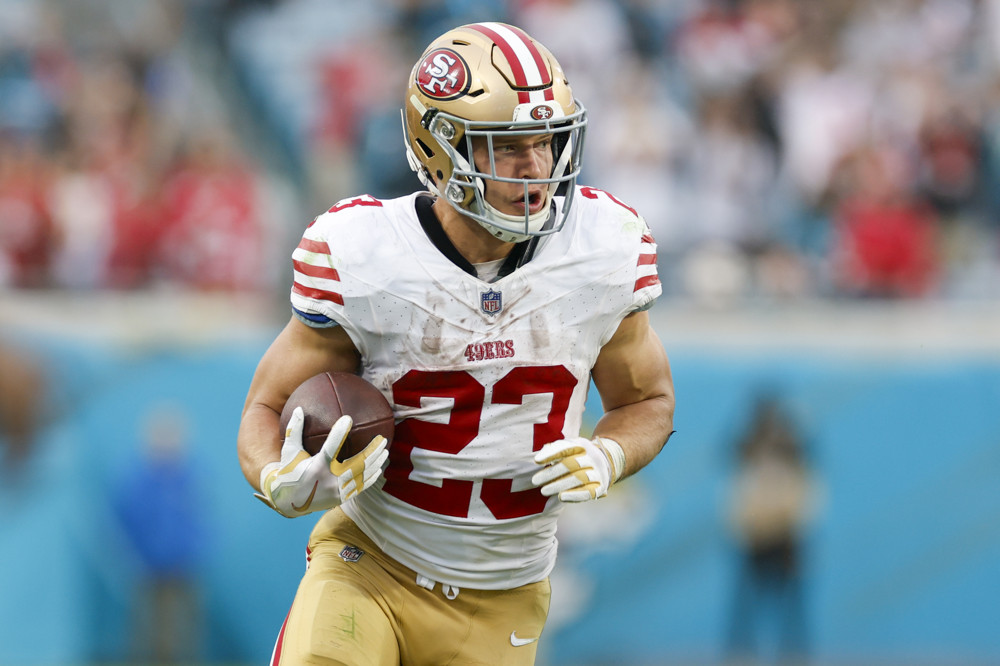
Remember 2023? That year saw no RBs reach 300 carries, the first time that had happened since 1990. The drought didn’t last long.
Six guys got there in 2024, and four more cleared 300 carries last season:
Before 2024, we hadn’t seen four RBs reach 300 carries in a season since 2016. And the five seasons before 2023 fell well short:
| Year | 300+ Carry RBs |
| 2022 | 3 |
| 2021 | 2 |
| 2020 | 2 |
| 2019 | 2 |
| 2018 | 1 |
Not sure when to draft RBs?
Head to the Draft War Room and get a custom cheat sheet for YOUR fantasy league.
While the rest of your league chases bell-cow rushers, you should remain focused on what matters most: receiving.
Catches deliver more fantasy value than rushing attempts. Let’s dig into why.
The Numbers Say It All: Receiving Still Wins
The four RBs above (Taylor, McCaffrey, Cook, and Henry) finished RB1, RB4, RB6, and RB7, respectively, in PPR.
The RBs between them got there with more receiving work. Carries obviously matter, but catches are the easier path to fantasy production.
On average, one rush attempt has equaled 0.62 PPR points over the past three seasons. A target? Nearly 1.55 PPR points.
Over the same stretch, top-12 RBs averaged 53.3 catches per season.
Of course, the elite performers tend to be the guys who mix that receiving with strong rushing volume. Over the same five-year sample, top-12 RBs have averaged 235.47 carries and 10.45 rushing TDs per season.
Christian McCaffrey's 414-point ceiling projection ranks First among RBs.
Our Projections Love These Pass-Catching RBs
Head to our RB rankings, and you’ll see we have seven RBs projected to hit 54+ catches:
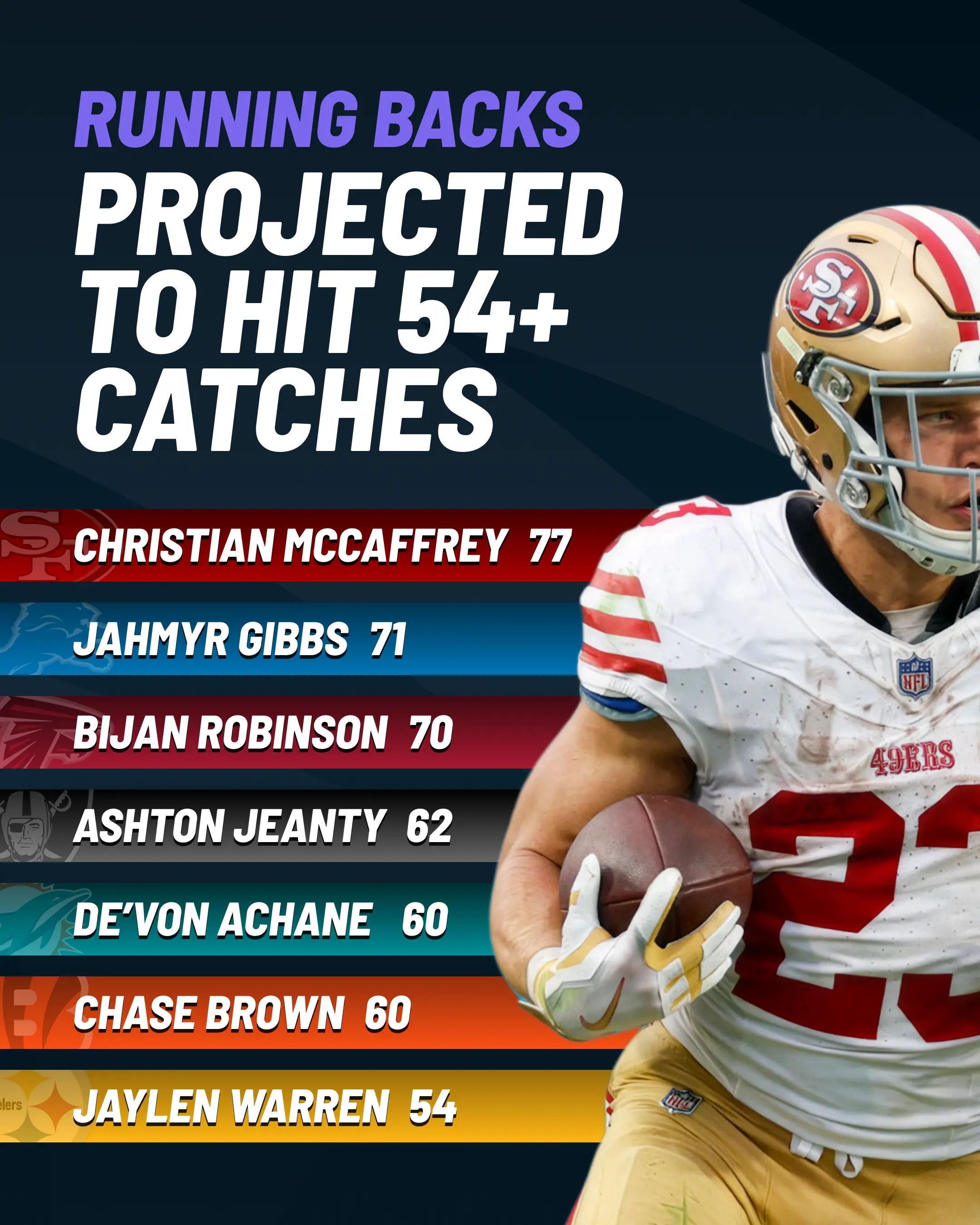
Four of the seven currently sit in the first round, according to consensus ADP. We're comfortable with three of those four at cost, per our ADP Market Index. The exception?
De'Von Achane Could Disappoint
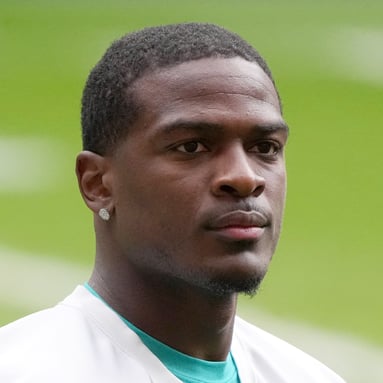
Achane is the lone outlier in this group.
He enters Year 4 in a Miami offense with plenty of downside. Achane’s setup looks worse than last year’s, thanks to an inexperienced QB, a barren WR corps, and an O-line that still hasn’t fully stabilized.
He remains a RB1, but expect his fantasy production to drop from last year's levels.
Only 11.7% of top-12 RBs over the past five seasons came from bottom-eight offenses, so Achane is an avoid at ADP if you expect the Dolphins offense to be among the league’s worst.
Achane does still have a path to paying off, of course. He could lead these Dolphins in targets and catches and simply get too much work to truly fail. But a heavier workload would also increase injury risk on the diminutive RB, and the situation overall simply presents more risk than in the past.
Zero-RB Targets That Keep You Competitive Weekly
We prefer to stay flexible throughout a draft over sticking to a specific pre-draft plan. But maybe you want to draft a zero-RB team or simply find the start of your draft pushing you in that direction.
In that case, here are some attractive targets.
This Trio Can Keep Zero-RB Afloat
Zero-RB typically refers to skipping RBs through at least the first six rounds. If you start in Round 7, consider this trio:
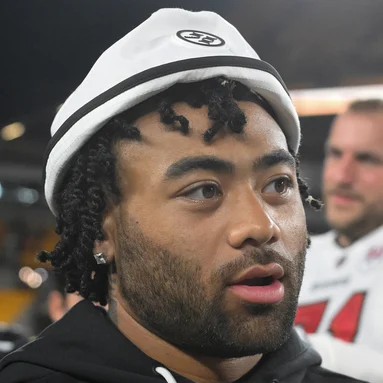
All three should be usable from Week 1 and have a decent shot to lead their backfields in fantasy points.
Warren faces the biggest challenge with Rico Dowdle now on the team. But receptions matter, and Warren should at least maintain the receiving lead over Dowdle.
Warren hit a 10.1% target share in 2024 and 14.0% in 2023. That number dipped to 8.3% with Kenneth Gainwell’s arrival last season, but Gainwell is gone and Dowdle doesn’t match the departed Steeler in receiving performance. Warren has been better in their respective careers.
TIP
Read more about potential late-round steals in our Sleepers article.
Lead Backs That Can Be Drafted Late
Drafting zero-RB means accepting that you probably won’t land every-week starters on draft day, so you’ll need to stock up on potential starters in the late single-digit rounds.
The Panthers backfield looks fertile for fantasy value, with Chuba Hubbard coming at a value (though his recent hamstring injury makes him a bit riskier to open the season). Hubbard opened last season as Carolina’s lead back. Over the first three weeks, he played 68.9% of the offensive snaps and ranked 11th among RBs in PPR points per game.
The injury does open the door for Jonathon Brooks, who remains a fine grab as one of our sleepers. We will see how high his ADP goes, but Brooks has the talent to develop into a lead back as well.
Rhamondre Stevenson faces tough competition with second-year RB TreVeyon Henderson looking to take a leap. But Stevenson holds the blocking edge and that may get him on the field. In 14 games together last year, Stevenson led Henderson in snap share (59.3% to 37.5%), route rate (48.8% to 29.2%), and target share (9.1% to 7.4%).
You'll definitely want to stock a zero-RB roster with upside shots like that.
Two Cheap Backs, Two Clear Paths
These guys make sense in the double-digit rounds:
- Jordan Mason, Minnesota Vikings. He could split carries in a committee situation with Aaron Jones, but the camp buzz has been strong on Mason being the lead back. He may not offer as much in the receiving department, but Mason is worth a shot at his 10th-round ADP.
- Jaydon Blue, Dallas Cowboys. Blue looks like the favorite for No. 2 RB duties behind Javonte Williams. Blue could handle some pass-catching work, and as we showed in this article, targets are just worth more fantasy points.
If you know you’d like to draft a zero-RB team, or you’re just toying with the idea, practice that plan in the Mock Draft Trainer and see how you like the results.
If a Zero-RB strategy feels too risky, you might prefer a Hero-RB strategy.
TIP
Using dynamic player rankings can help you stay flexible. Learn more about the best way to draft.
Hero-RB: Your Path to Drafting Sanity
Hero-RB means drafting your RB1 in Round 1 or 2, then waiting several rounds before addressing the position again.
For this year, you might use a Round 1 pick on Bijan Robinson and then wait until Round 6 to take D’Andre Swift.
Value still supercedes any preset build, so you need to stay flexible. Hero-RB simply gives you more room than Zero-RB to follow the board.
Double Hero-RB: A Smart Bet on Early Value
There are certain positions this year where taking two RBs in the first two rounds has become common. This strategy is known as a Double Hero-RB.
Double Hero-RB lets you lock in a pair of stud backs before filling out the rest of your lineup. This year, that could mean opening with Christian McCaffrey in Round 1 and Chase Brown in Round 2.
The goal is to lock down two every-week starters early, then wait until much later for insurance at the position. Think Round 8 or later.
Follow the Value, Not the Script
Ultimately, your best strategy will be to stay flexible as the draft unfolds.
You could make any of those aforementioned strategies work in your draft. But your best bet will be to stay flexible and follow the value of your specific draft.
What if you’re trying to go hero-RB but the top options start flying off the board ahead of ADP? You’ll want to pivot to WR rather than reaching for a weak RB value to fit a static plan.
Or maybe the opposite occurs. Let’s say you’re planning to lean away from RBs early in your draft … but half your league has the same idea. Are you going to pass on a screaming RB value just so you can stick to your script?
I wouldn’t recommend it.
Want More Prep?
Check out the draft guide that fits your format for tips at every turn, from every draft position. And your Draft War Room is always ready to guide you toward value picks specific to your draft.
As you get to the later rounds, it’ll even switch into Upside Mode to highlight breakout types at RB (and other positions).
These Sneaky Late-Round RBs Could Make Your Year
Finding a late-round RB who blows up can change your team's fortunes.
Think Kenneth Gainwell last year. He opened the year in a committee, but his pass-catching role led to plenty of PPR scoring. Gainwell ranked sixth among RBs with 85 targets last season and fourth with 73 catches. That type of receiving makes any RB valuable in PPR, even if he’s splitting time.
Fantasy managers often avoid committee backs because the touches are hard to project. But if you find the talented back with discounted access to opportunity, you can land a difference-maker.
Handcuff backs also make sense. Target one for …
- his strong offense
- the fragility of the starter in front of him
- or the backup’s sheer talent
… and you’re one injury away from a potential fantasy starter.
TIP
Check out our RB Handcuff Rankings.
Here are a few deeper sleepers we’re drafting:
Jacory Croskey-Merritt, Washington Commanders
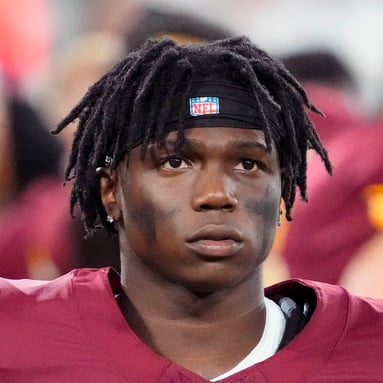
Croskey-Merritt entered 2025 as a seventh-round pick with minimal expectations and beat them. He finished RB33 at 8.3 PPR points per game. His role never got consistent enough to be startable in most fantasy leagues, but it was a positive start for a guy who played just one game in his final college season.
The efficiency metrics for Croskey-Merritt looked strong as well. Among 51 RBs with 90+ carries, he ranked 15th in yards per carry (4.60) and 12th in rush yards over expected per attempt (0.79).
Washington also wants to get JCM more involved as a receiver, so the offense isn’t telegraphing play calls as much with its backfield personnel. He has gotten more receiving work in training camp and shown improvement.
Croskey-Merritt’s been the favorite to lead this backfield in carries all along. Adding passing production could vault him to weekly-starter status in fantasy.
Jaydon Blue, Dallas Cowboys
HC Brian Schottenheimer said in June that Blue returned with a "night and day" difference in his approach, and that progress has carried into training camp where he appears to be the No. 2 RB on the Cowboys.
The athleticism and receiving chops have always been there. Blue blazed a 4.38-second 40 time at the Combine, averaged 5.4 yards per carry and 9.0 yards per catch at Texas, and caught 42 passes in his final college season.
Blue's pass-catching ability is especially interesting in Dallas, where Javonte Williams averaged just 3.9 yards per catch last year and ranked last among RBs with 25+ targets in yards per route run. If Blue proves he can handle passing-down work, he could carve out standalone PPR value.
And if Williams misses time, Blue has the talent to emerge as the Cowboys' most productive back, even if he'd share work with Phil Mafah and Malik Davis.
Blue can be had pretty late in drafts and is worth a shot before we find out what his role is.
MarShawn Lloyd, Green Bay Packers
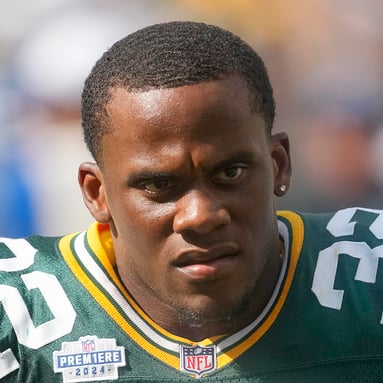
Lloyd is back again, impressing in training camp as the potential No. 2 RB on the Packers. He is flashing big-play ability and working in with the first-team offense. If he can stay healthy, Lloyd looks like a heavy favorite to be the Josh Jacobs handcuff.
Lloyd's talen hasn't been the issue. He averaged 5.6 yards per carry across three college seasons, including 7.1 in 2023, when 15.7% of his carries went for 15+ yards, the highest rate of any RB in the 2024 draft class.
Lloyd then clocked a 4.46-second 40 time at 220 pounds, earning an 86th percentile Speed Score.
Multiple injuries have limited him to just 10 snaps through two NFL seasons. But Lloyd spent months this offseason working with a biomechanics specialist who found he was overcompensating for his 2020 ACL tear, leading to ankle, hip, and quad deficiencies.
If Lloyd has truly solved his health woes, he should have no problem winning the No. 2 job in a Packers backfield that lost Emanuel Wilson this offseason.
He's a priority target in the final few rounds of fantasy drafts.
Dominate Your League with the Perfect Draft Tool
The draft is the most critical part of your fantasy season.
You know you need to draft the right players at the right time -- but how?
Start with the dynamic Draft War Room, where you'll get custom player values for your fantasy league.
Take a few minutes to watch the video below, and you'll learn why this is the most powerful draft tool in the industry: